Home / Water Leak Emergency
Home > Plumbing Services > Emergency Water Leak Repair
Emergency Water Leak Repair in Philadelphia, PA
A water leak from a ceiling, wall, pipe, toilet, sink, appliance connection, or water heater can damage finishes and belongings quickly. A hidden leak may continue behind plaster or drywall without an obvious puddle. The first priority is to stop additional water if you can do so safely, keep away from electrical hazards, and have the source located and repaired.
- Primary call to action: Call [VERIFY BUSINESS PHONE NUMBER]
- Secondary call to action: [REQUEST SERVICE / CONTACT]
- Trust note: Business name, availability, credentials, response area, and service promises must be verified before this page is published.
Practical help before sales pressure
- Safe guidance for active and suspected leaks
- Careful diagnosis language rather than remote guesswork
- Repair options explained without automatically recommending repiping
- Clear separation between plumbing repair and water-damage restoration
What to do when you suspect a water leak
If water is actively leaking, your first goal is to limit the flow without putting yourself in danger.
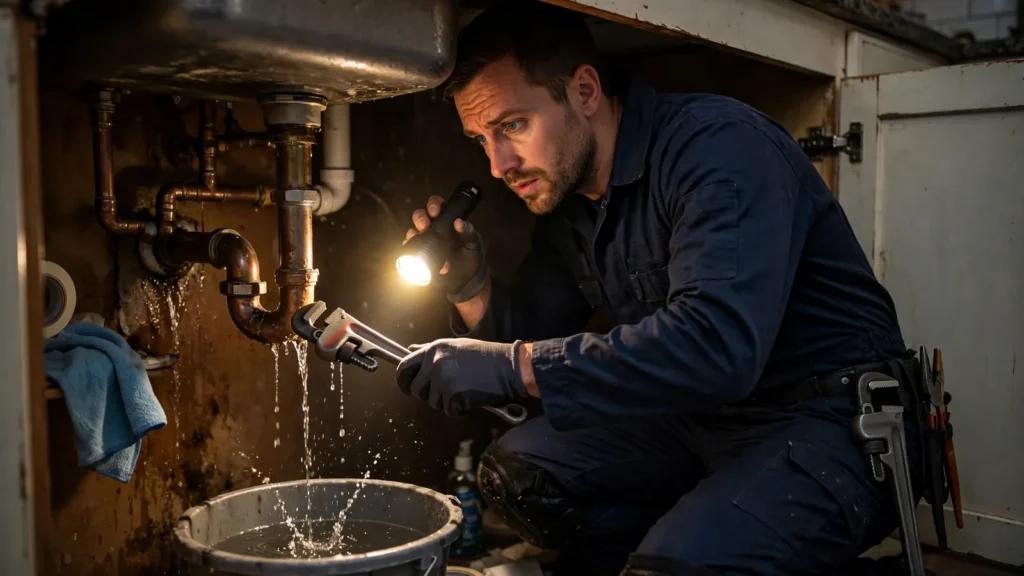
- Try the nearest fixture shutoff first. If the leak is under a sink, behind a toilet, or connected to an appliance, close the local supply valve only if it is easy and safe to reach. Turn it gently. An older valve may be seized or fragile; do not force it.
- Use the main water shutoff when the source is unknown or water is spreading. If the main valve is safely accessible and you know how it operates, shut it off. If reaching it requires entering water, approaching wet electrical equipment, or moving through an unsafe area, stay away and call for help.
- Contain water from a safe position. Use buckets and towels for a manageable drip. Move furniture, rugs, documents, and electronics away from the affected area if you can do so without stepping beneath a bulging ceiling or near wet electrical equipment.
- Keep people out of the hazard area. Close the room or create distance around wet outlets, ceiling fixtures, unstable plaster, or spreading water.
- Document what you can safely see. Photos and notes about when the leak started, which fixtures were running, and where water appeared can help the plumber assess the problem and may be useful for an insurance conversation.
Safety warning: NEVER touch a wet light fixture, outlet, switch, appliance connection, or breaker-panel area. Water and electricity can create a severe shock or fire hazard. Leave the area and call for appropriate emergency help.
Safety warning: NEVER poke, press, drill, or puncture a bulging or sagging ceiling. It may be holding a large volume of water and can fail suddenly.
Safety warning: NEVER ignore water near the electrical panel. Keep away from the area and seek emergency assistance.
If water continues after a safe shutoff attempt, is spreading rapidly, or is coming through a light fixture, treat the situation as an emergency.
For an active leak that cannot be isolated safely, call [VERIFY BUSINESS PHONE NUMBER] or use [REQUEST SERVICE / CONTACT].
Need help now?
How to recognize a hidden or developing water leak
Some leaks announce themselves with dripping water. Others develop slowly behind a wall, above a ceiling, or beneath a floor. Possible warning signs include:
- a stain that grows, darkens, or returns after drying;
- bubbling, blistering, or peeling paint;
- soft, sagging, cracked, or crumbling drywall or plaster;
- a dripping, hissing, or running-water sound when fixtures are not being used;
- a persistent musty odor or damp feeling in one area;
- a warm spot on a floor that could be associated with a hot-water line;
- warped wood, loose flooring, or swollen trim;
- a puddle beneath a sink, toilet, dishwasher, washing machine, refrigerator line, or water heater;
- an unexplained increase in water use or the water meter moving while all fixtures are off.
These signs do not prove that a supply pipe is leaking. Roof intrusion, condensation, drainage problems, appliance leaks, or water traveling from another room can create similar symptoms. A plumber may need to trace the water back to its source before recommending a repair.
In a Philadelphia rowhome, water may travel along framing, plaster, pipe chases, or a shared party wall before it becomes visible. The wet spot is not always directly below the failed pipe. If a neighboring unit may be affected, communicate promptly and avoid assuming the leak is contained to one property.
Possible causes of ceiling, wall, and fixture leaks
There is no single cause for every water leak. Possible causes include:
Aging or corroded supply piping
Older galvanized steel can corrode internally and externally. Copper can develop pinhole leaks or fail at joints. Pipe age alone does not determine whether a spot repair or broader work is appropriate; the surrounding condition matters.
Failed fittings, joints, or connections
A joint may loosen, a seal may fail, or a fitting may crack. Leaks can also appear after vibration, building movement, or prior work. The visible water may be some distance from the actual failure.
Worn fixture and appliance supply lines
Flexible hoses serving toilets, faucets, washing machines, dishwashers, and refrigerators can loosen, split, or deteriorate. Old rubber hoses may be more vulnerable than properly installed braided stainless steel replacements, but every connection still needs correct sizing and installation.
High water pressure
Excessive pressure can stress valves, hoses, and joints. A plumber may measure static and operating pressure and assess the pressure-reducing valve where one is present. Pressure should be measured rather than guessed from how forceful a faucet feels.
Freeze-thaw damage
Water expanding inside a frozen pipe can split the pipe or weaken a fitting. Leakage may not become obvious until the pipe thaws. See the related frozen pipe repair page at /frozen-pipe-repair/ for freeze-specific warning signs and safe steps.
A leaking water heater
Water near a tank may come from a connection, valve, discharge pipe, drain valve, or a failing tank. A tank leak needs prompt assessment. See leaking water heater guidance at /no-hot-water-emergency/.
When a water leak is an emergency
Treat a leak as urgent when any of the following is happening:
- active water flow cannot be stopped;
- water is coming through a ceiling or light fixture;
- water is near the electrical panel, outlets, switches, wiring, or powered equipment;
- flooding is spreading across a floor or toward stairs;
- an in-wall leak cannot be isolated;
- the ceiling or plaster is bulging, sagging, or shedding material;
- the leak is affecting a neighboring unit or shared wall;
- a freeze-split or failed line has produced a sudden large flow.
A severe supply-line failure may require burst pipe repair; see /burst-pipe-repair/ for that guidance.
A small drip may be suitable for a scheduled visit when it is fully contained, can be stopped at a fixture valve, is away from electrical hazards, and is not damaging surrounding materials. “Small” does not mean “ignore it.” Monitor the area, keep the water off if practical, and arrange repair before the condition worsens.
When in doubt, describe exactly what is happening — where the water appears, whether it is still flowing, whether electricity is nearby, and whether the shutoff worked — so the service provider can help determine the appropriate response.
What a plumber may do to locate and repair the leak
A plumber may begin by asking when the symptom appeared, what fixtures were in use, whether the meter shows flow, and whether local or main shutoffs changed the leak. The diagnostic approach depends on the building and symptoms.
Possible steps include using a moisture meter to map damp material, thermal imaging to look for temperature differences, pressure testing an isolated line, inspecting accessible fixtures and connections, and comparing observations above and below the affected area. These tools narrow the search; they do not guarantee that every leak can be found without access.
If the failed pipe is concealed, the plumber may recommend a limited opening in drywall, plaster, cabinetry, or another finish. The goal should be to open only what is reasonably necessary, but access requirements depend on where the pipe runs and how safely it can be reached. Ask who is responsible for closing and refinishing the opening after the plumbing repair.
Once the source is confirmed, a plumber may isolate the affected section, replace a failed fitting or length of pipe, reconnect and support the line, restore water in a controlled way, and check for additional leakage. The plumber may also inspect adjacent piping and measure water pressure if repeated failures or stress are suspected.
Plumbing repair stops the source. Drying wet walls, ceilings, floors, insulation, or belongings may require a separate water-damage restoration company. If materials remain wet or contamination is involved, ask what drying or remediation steps are appropriate; a plumber should not diagnose mold.
Spot repair or partial repipe: choose from evidence
A spot repair may be reasonable when inspection identifies one accessible failed fitting, valve, hose, or short pipe section and the surrounding material appears serviceable. It can limit disruption and address the confirmed source.
A partial repipe may deserve consideration when inspection finds widespread corrosion, repeated leaks in the same run, incompatible or deteriorated materials, poor access that would make repeated openings likely, or pressure conditions that have contributed to failures. It should not be recommended automatically because one leak occurred.
The appropriate approach depends on inspection. Ask the plumber to explain:
- the confirmed failure point;
- the condition of nearby pipe;
- the pipe material and estimated service condition;
- whether there is evidence of previous leaks or repairs;
- measured water pressure, if relevant;
- access and finish-repair implications;
- what is included and excluded from the proposed scope.
After the source is confirmed, request a clear explanation of the repair options before authorizing broader work. Contact [VERIFY BUSINESS PHONE NUMBER] or [REQUEST SERVICE / CONTACT].
Need help now?
What a typical visit may involve
A typical visit may involve the following sequence, although every property and company process differs:
- Review the symptoms, timing, affected rooms, and any shutoff actions already taken.
- Confirm whether water is still flowing and whether the area is safe to approach.
- Inspect accessible fixtures, valves, connections, and adjacent spaces.
- Use appropriate diagnostic tools to narrow down a concealed source.
- Explain any access opening that may be required before cutting finishes.
- Repair or replace the failed section after the scope is authorized.
- Restore pressure carefully and check the repaired area for leakage.
- Inspect nearby plumbing where conditions suggest a related risk.
- Explain what was found, what was repaired, what still needs drying or finish work, and what prevention steps make sense.
Do not assume every visit includes thermal imaging, pressure testing, restoration, finish repair, or a warranty. Confirm the scope with the specific business.
How to reduce the risk of future leaks
Know the shutoffs before an emergency
Locate the main water shutoff and the local valves for sinks, toilets, appliances, and the water heater. Make sure household members know where the main valve is. Do not wait for water to be spreading before discovering that a valve is hidden, unlabeled, or seized.
Inspect visible connections
Periodically look beneath sinks, behind toilets, around appliance hoses, and near the water heater. Check for corrosion, mineral deposits, damp cabinet floors, soft materials, or slow drips. Fixing a small confirmed leak early can prevent damage to finishes and belongings.
Replace vulnerable hoses thoughtfully
Old rubber washing-machine or fixture hoses may be candidates for properly sized braided stainless steel replacements. Installation quality and connection condition matter; do not overtighten fittings or use a hose not rated for the application.
Measure suspected pressure problems
If fixtures, valves, or hoses fail repeatedly, ask for a water-pressure test. A pressure regulator may be appropriate when measured pressure is excessive, but it should not be added solely on a guess.
Protect piping in cold areas
Pipes near exterior walls, crawl spaces, unheated rooms, or drafts may need insulation or other building-specific freeze protection. Do not use an open flame to thaw a pipe.
Pay attention to changes
Watch for unexplained water-use increases, recurring stains, new musty odors, or a meter that moves when all water use is off. A single observation may have another explanation, but a pattern deserves investigation.
Why prompt attention matters
Water can move beyond the visible stain into insulation, framing cavities, plaster, drywall, flooring, cabinets, and a neighboring unit. The longer the source remains active, the more material may require drying or replacement. Persistent dampness can also create moisture-related concerns; only an appropriate professional should evaluate suspected mold.
A slow leak can worsen suddenly if corrosion expands, a hose splits further, or a weakened joint fails. Prompt attention does not always mean a large repair. It means controlling the water, identifying the actual source, and choosing a proportionate response before the damage spreads.
What affects water leak repair cost
Actual pricing depends on the specific situation and the business’s pricing. Request an explanation of the scope rather than relying on an unsupported online price. Cost factors may include:
- whether the leak is visible or concealed;
- access behind tile, plaster, drywall, cabinetry, or a finished ceiling;
- the length and material of pipe requiring repair;
- the condition of adjacent pipe and fittings;
- the diagnostic work needed for a hidden leak;
- whether pressure testing or specialized equipment is appropriate;
- emergency or after-hours timing;
- separate drying, restoration, finish repair, or electrical work.
Ask whether the estimate covers diagnosis, access, plumbing repair, materials, pressure testing, cleanup, finish restoration, and any follow-up. Do not assume water-damage restoration is included in a plumbing invoice.
Before the plumber arrives
- Keep the affected water supply off if the leak is active and the shutoff is safe to use.
- Move valuables from the area without approaching wet electrical equipment or unstable ceilings.
- Note when the leak began, where water first appeared, and which fixtures were in use.
- Take photos from a safe location.
- Keep children, pets, tenants, and neighbors away from hazards.
- Clear a safe path to the main shutoff and affected fixture when possible.
- Do not attempt soldering, pipe cutting, wall opening, or a pressurized patch.
- Tell the plumber immediately if water is near electricity or affecting another unit.
DIY limits: what is safe and what needs a professional
Safe homeowner actions are limited to shutting an accessible valve, containing a manageable drip, moving belongings, documenting symptoms, and keeping people away from hazards. A simple fixture connection may look straightforward, but concealed piping, damaged shutoffs, high pressure, and wet electrical areas can change the risk quickly.
Professional help is appropriate for leaks behind walls or ceilings, repeated leaks, soldering or repiping, pressure problems, failed main shutoffs, water-heater leaks, and any situation involving electrical equipment or unstable building materials. A temporary tape or clamp is not a substitute for diagnosing the failed material and making a durable repair.
Trust and credentials
Only publish trust badges and business claims after verification:
- Business legal or trading name: [VERIFY BEFORE PUBLISHING]
- Philadelphia service address or service-area basis: [VERIFY BEFORE PUBLISHING]
- Business phone number: [VERIFY BEFORE PUBLISHING]
- Operating hours and emergency availability: [VERIFY BEFORE PUBLISHING]
- Pennsylvania registration or plumbing license information, if applicable: [VERIFY BEFORE PUBLISHING]
- Insurance status: [VERIFY BEFORE PUBLISHING]
- Technician qualifications: [VERIFY BEFORE PUBLISHING]
- Written workmanship or parts warranty: [VERIFY BEFORE PUBLISHING]
- Review count, rating, and review source: [VERIFY BEFORE PUBLISHING]
Do not display “licensed,” “insured,” “24/7,” “same-day,” “guaranteed,” “Philadelphia-wide,” or similar badges until evidence is available and current.
Frequently asked questions
How do I know if I have a water leak?
Look for active dripping, recurring stains, bubbling paint, sagging plaster or drywall, warped flooring, damp odors, running-water sounds, unexplained puddles, or water use when fixtures are off. Similar symptoms can come from roofs, drains, condensation, or appliances, so professional diagnosis may be needed.
What should I do first if I find a leak?
Shut the nearest fixture valve if it is safe and easy to reach. If the source is unknown or water is spreading, use the main shutoff only if it is safely accessible. Contain water, move belongings, avoid wet electrical areas, and do not touch a sagging ceiling.
Should I shut off my main water valve?
Use the main valve when an active supply leak cannot be stopped locally or its source is unknown, provided you can reach and operate the valve safely. Do not enter standing water or approach electrical hazards to reach it, and do not force a seized valve.
Is a small drip an emergency?
A contained drip away from electricity may be suitable for scheduled service, but it should not be ignored. It becomes urgent if the flow increases, materials begin to sag, water spreads, the local shutoff fails, or electricity or another unit is affected.
How do plumbers find hidden leaks without tearing up my house?
A plumber may combine symptom history, moisture readings, thermal imaging, pressure testing, meter observations, and inspection of adjacent spaces. Some concealed leaks still require a limited access opening. Ask for the proposed access plan before finishes are opened.
What causes pipes to leak inside homes?
Possible causes include corrosion, failed joints, loose connections, worn supply hoses, excessive pressure, freeze-thaw damage, and failure at a water heater or fixture. Inspection is needed to identify the actual cause.
When does a leak become an emergency?
Treat it as an emergency when water cannot be stopped, is spreading, comes through a ceiling or light fixture, reaches electrical equipment, causes a ceiling to bulge, affects another unit, or creates rapid flooding.
Can I fix a leaking pipe myself?
Limit DIY action to safe shutoff and containment. Do not work near wet electrical equipment, open a bulging ceiling, solder concealed piping, cut into pressurized lines, or attempt repiping. A plumber should handle concealed, repeated, pressurized, or hazardous leaks.
How much does water leak repair cost?
Cost depends on location, access, pipe material, diagnostic complexity, repair scope, timing, and whether restoration is separate. The business should provide pricing based on the actual situation; this page should not publish an invented range.
How can I prevent water leaks?
Know your shutoffs, inspect visible connections, replace vulnerable hoses appropriately, investigate recurring pressure-related failures, protect cold-area pipes, watch for unexplained water use, and repair small confirmed leaks before they spread.
Get help with an active or suspected water leak
If water is spreading, cannot be shut off, is near electricity, or is affecting a ceiling or neighboring unit, keep away from the hazard and seek emergency help. For a contained or suspected hidden leak, arrange an inspection before the condition worsens.
- Call: [VERIFY BUSINESS PHONE NUMBER]
- Request service: [REQUEST SERVICE / CONTACT]
Need help now?
No response-time, availability, pricing, guarantee, or service-area claim should be added until verified.
Related services
Burst Pipe Repair
Active burst and water-damage triage.
Frozen Pipe Repair
Frozen-pipe symptoms, safe first steps, repair pathway.
No Hot Water Emergency
Urgent water-heater failure.