
Home / Burst Pipe Repair
Burst Pipe Repair in Philadelphia, PA
A burst or severely leaking water pipe can release a large amount of water into a home, rental, office, restaurant, or other property. Prompt, safe action may limit damage to walls, ceilings, floors, insulation, equipment, and belongings. If water is actively spreading, focus first on people, electrical safety, and stopping the water only when the shutoff is safely accessible.
24-Hour Emergency Services
100% Satisfaction Guaranteed
Quality Trained Technicians
What to do when a pipe bursts
Water moving fast? Do this in this order.
When water is moving quickly, order matters. And rule zero: never put yourself in danger to reach a valve or save property.
🔴 Move 1 : People safe
Children, customers, employees, tenants, pets — everyone away from standing water, sagging ceilings, damaged surfaces, and anywhere water meets electrical equipment. Things can be replaced. People can’t.
🟡 Move 2 : Water off (only if safe)
- One fixture leaking? Use its shutoff valve.
- Can’t isolate it? Use the main house shutoff — only if you know where it is and can reach it without entering a hazardous area.
- Never force a seized valve — you’ll make it worse.
- Stop using everything on that line — sinks, showers, toilets, dishwasher, washing machine.
- Limit the spread — move belongings, towels or containers for minor water, only where safe. Never stand under a bulging ceiling. Never step into water near outlets, appliances, wiring, or the electrical panel.
🟢 Move 3 : Call
Uncontrolled leak, hidden active leak, soaked ceiling or wall, business disrupted, water near electrical — that’s a pro’s job. If the area looks unsafe, leave it and call emergency services or your utility.
Water is still moving?
How can I tell whether a pipe has burst?
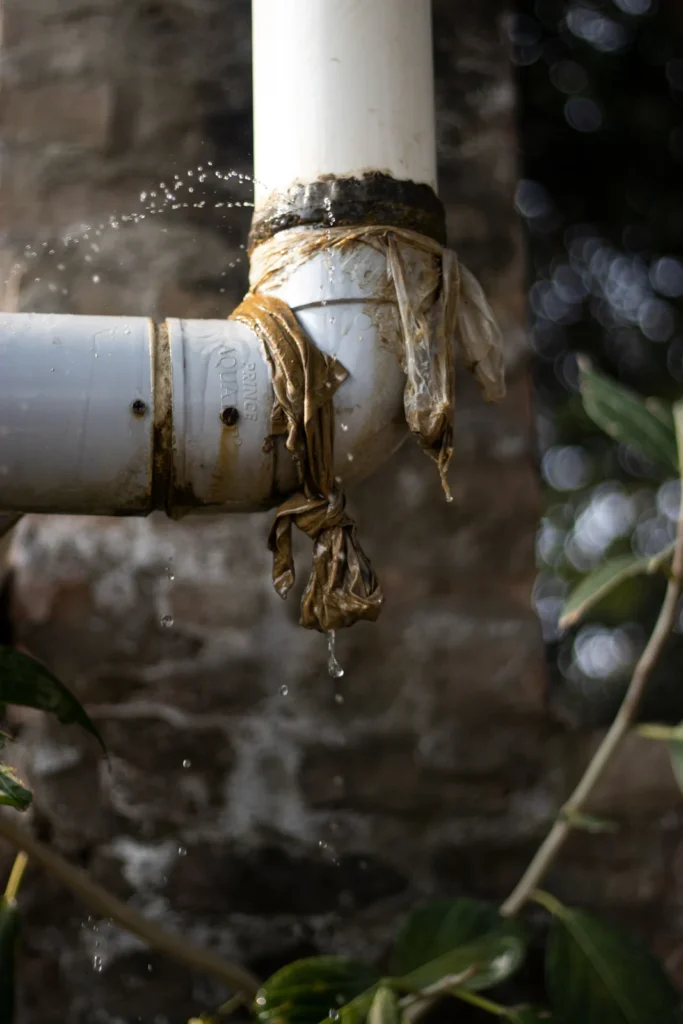
A burst pipe does not always look like a pipe split wide open. It may be a pinhole in a corroded section, a failed fitting, a cracked supply line, or a rupture hidden behind drywall, under a floor, above a ceiling, or in a utility space. Possible warning signs include:
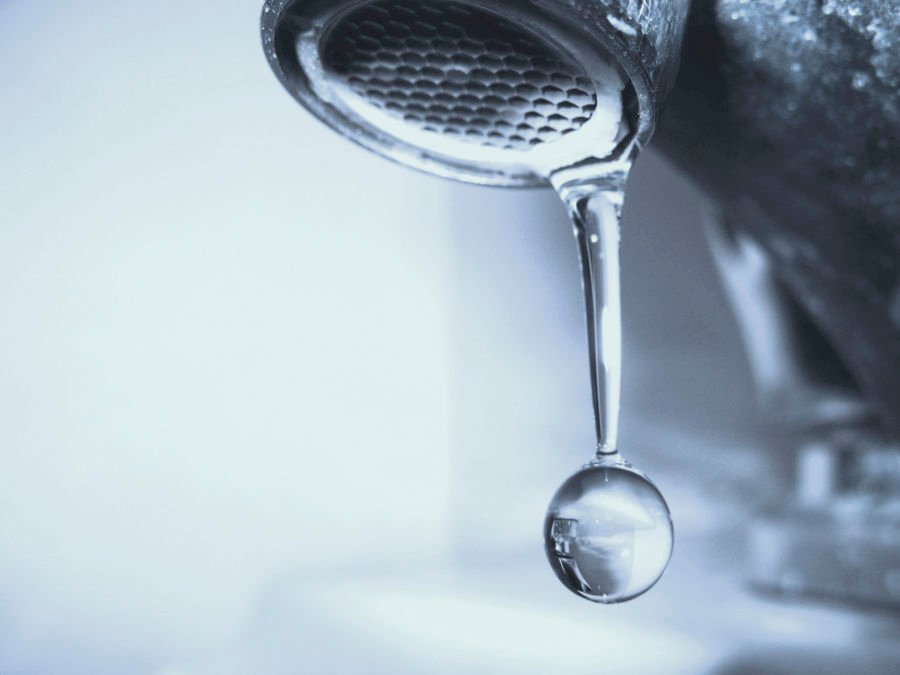
A sudden drop in water pressure or little water at several fixtures.

Rushing, spraying, dripping, or hissing sounds when fixtures are not being used.
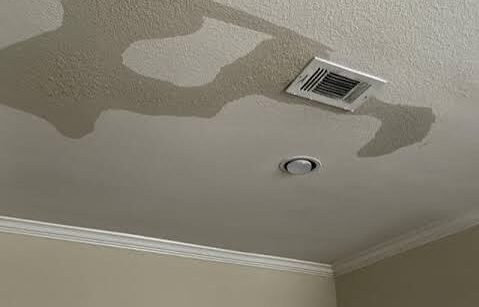
Water appearing through a wall or ceiling, wet drywall, bubbling paint, or a stain that is actively spreading.
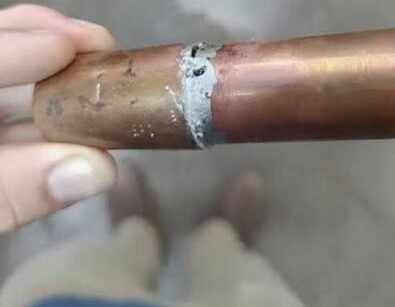
A visible split, crack, pinhole spray, failed joint, or water running along a pipe.
A damp or flooded area with no obvious fixture overflow.
An unexplained change in water use combined with moisture symptoms.
These symptoms can have different causes. A roof leak, drain leak, failed appliance connection, waterproofing issue, condensation, or water entering from another location may look similar. Professional diagnosis may be necessary, especially when the source is hidden or water continues after a fixture is shut off.
When is a burst pipe an emergency?
If water is spreading and you can’t stop it, it’s an emergency. A burst pipe isn’t always a dramatic split . Sometimes it’s a tiny pinhole or a hidden crack. But if the drip is caught in a bucket and the valve is off, you can wait till morning.
Just ask yourself these three questions:
1. Can you stop the water?
If you can’t find the shutoff, or can’t reach it, don’t wait. Call.
2. Is it near electricity, or is it rising?
Water and electricity don’t mix. A rising flood won’t wait either.
3. Is it caught and contained?
Drip in a bucket, valve closed, nothing spreading? You’re okay till morning.
CALL NOW
- Water is spreading and you can’t find the shutoff
- It’s coming through your ceiling or wall
- It’s near anything electrical — step back, don’t touch it
- Your basement is filling up
- It smells like sewage, don’t go near it
- It’s freezing outside, other pipes could burst next
CAN WAIT
- A slow drip into a bucket, with the valve turned off
- A small leak that’s staying put, far from anything electrical
- You can keep an eye on it till morning
Here’s the honest truth: a burst pipe never fixes itself. Every hour, water creeps further — behind your walls, under your floors — and the repair bill grows with it.
Still not sure?
What causes water pipes to burst or fail?
Most burst pipes come down to a handful of usual suspects. Here they are — in plain words:
01 · Freezing
Water expands as it freezes and pushes hard against the pipe walls and joints. The leak often doesn’t show up until things thaw and water starts moving again.
02 · Corrosion & aging
Metal pipes can rust and thin out over the years, and joints weaken with age. One leak doesn’t mean the whole system is bad — but nearby pipes made of the same material are worth checking.
03 · Pressure & weak fittings
High or fluctuating water pressure, loosely supported pipes, stressed connections, or a poor old repair can all make a pipe give out.
04 · Joints, valves & connectors
Leaks often start where pipes connect — at valves, flexible connectors, appliance lines, or where two pipe materials meet — not in the middle of the pipe.
⚠️ Never use an open flame to thaw a pipe — it’s dangerous and can damage the pipe. A suspected frozen section needs a safe method suited to the pipe material.
One visible failure doesn’t prove the whole system needs replacing. But finding the real cause matters — patching only the wet spot won’t help if high pressure is the real problem.
Not sure what’s causing yours?
Describe what you’re seeing on a quick call — we’ll connect you with a local Philadelphia plumber who can tell you what it likely is and what to do next.
Philadelphia properties need a property-specific diagnosis
Every property is different — and in Philadelphia, that matters more than in most cities.
🏠 Why Philly homes are tricky
- Older attached homes (rowhouses) with shared walls
- Basements and tight, cramped utility spaces
- Mixed-age plumbing — original pipes plus renovations
- Rentals and businesses with heavier pipe use
🔍 Why the source hides
- Winter cold exposes the weakest pipe sections
- Pipes run concealed through walls and ceilings
- Tight basements make the leak hard to reach — and hard to find
Who’s responsible? The Philadelphia Water Department explains that customers are responsible for faulty plumbing from the connection serving the property and for plumbing inside the home. Exactly where the failure sits decides responsibility — so identify the source before assuming anything.
Leak hiding where you can’t see it?
If the source is behind a wall or above a basement ceiling, a local Philadelphia plumber can track it down fast — and tell you who’s responsible for the fix.
What will a plumber actually check?
Here’s a secret: you can do half the detective work before anyone arrives — and it gets you help faster.
🩺 The 60-second checklist — note these down before you call:
- ☐ Where did the water first appear?
- ☐ Is it one fixture — or more than one?
- ☐ Can you reach the shutoff valve — and does it actually turn?
- ☐ Any strange sounds — hissing, banging, hammering?
- ☐ Any corrosion — green or white crust on the pipes?
- ☐ Is water anywhere near electricity? If yes — step back, don’t touch it.
When you call with these answers ready, the plumber knows exactly what to bring and where to start — no guessing, no wasted visit. And remember: water travels along framing, pipes, and ducts, so the stain you see is rarely the actual break.
Noticed any of these? Call now.
Just read your checklist answers over the phone — a local Philadelphia plumber takes it from there.
What may a plumber inspect?
Think of it as the plumber’s field notes — here’s what gets written down during the visit:
📋 FIELD NOTES — burst pipe callout
Water source — where it’s showing, where it first appeared, how far it spread.
Reachable pipes — material, supports, corrosion, pressure concerns.
Valves, fittings & joints — do the shutoffs actually turn? Any stressed connections?
Nearby connections — what’s linked to the failed section.
If the leak is hidden — trace how the water traveled, check whether more than one fixture is affected, look for other compromised sections.
Stopping the water isn’t the same as finding the cause. Water follows framing, pipes, ducts, and sloped surfaces — so the stain you see is rarely where the plumbing actually failed.
Seen enough to make the call?
When can a burst pipe be repaired?
Good news first: most burst pipes can be fixed. The real question isn’t “can it?” — it’s “what kind of fix does it need?”
✅ Repairable — IF these three check out:
- The pipe around the damage is still solid
- The damaged spot can actually be reached
- The fix won’t leave a weakened joint behind
What the right repair depends on: pipe material · size and type of damage · location · fitting condition · access · water pressure · and any code or permit requirements.
What the fix usually looks like:
- Cut & replace — the damaged section comes out, compatible pipe and fittings go in
- Swap the part — a failed connector or valve gets replaced
- Rebuild the joint — the specific bad joint is corrected properly
⚠️ A clamp or patch can stop water today — but it’s not automatically a permanent repair. Always ask: “Is this temporary stabilization, or the lasting fix?”
When might pipe replacement be needed?
Sometimes a repair is just a bandage. Here’s how to tell which situation you’re looking at:
🔧 Repair is enough when…
- Damage is in one spot
- The surrounding pipe is still solid
- It’s the first failure
- The spot is reachable
🔄 Replacement time when…
- Leaks keep popping up in new spots
- The pipe is thin or corroded in several places
- The pipe material itself is failing or outdated
- Damage is too wide for a section fix
Nobody should sell you a full replacement off a single leak. If replacement is suggested, ask what exactly makes a repair insufficient — a straight answer is a good sign.
Not sure which camp you’re in?
When might pipe replacement be needed?
Replacement isn’t the default — it’s the answer when the pipe’s condition earns it. Count how many of these sound like yours:
- Damage stretches beyond one small area
- Pipe is heavily corroded or brittle
- Failures have happened before — this isn’t the first one
- Fixing it means opening up the same area all over again
- Material or connections aren’t reliable anymore
- Nearby sections look just as bad
Mostly no → a limited repair is probably viable. Several yes → ask for evidence before agreeing to more.
Before you agree to replacement, ask the plumber:
- What exactly was inspected?
- What evidence supports this scope of work?
- Is a limited repair viable instead?
- What risk remains in the surrounding plumbing?
Need help now?
How does burst pipe repair work?
No mystery, no jargon — here’s exactly what happens, step by step, from the moment you call:
- You describe what you see — when it started, what’s already shut off, and whether water is still moving.
- The water gets stopped — a shutoff valve (or another safe method) isolates the affected section.
- The real break is found — only as much wall or ceiling opened as needed, and the source separated from where the water merely appeared.
- Everything around it gets checked — nearby pipe, fittings, valves, supports, and corrosion that could affect the fix.
- You get honest options — what’s wrong, repair vs. replacement, limits, and whether wall repair or permits are a separate matter.
- The fix happens — damaged section out, compatible materials and proper connections in.
- Water comes back slowly — the system returns to service in a controlled way, not a sudden blast.
- Everything gets rechecked — the repair and nearby connections tested for leaks, remaining concerns discussed.
- You get the full picture — walls, drying, flooring, pressure, or bigger piping issues that fall outside this repair, explained plainly.
Request your burst-pipe assessment
Have these ready when you call: where the water appeared · is it still flowing · which shutoff you used · property type · any safety concern
Why prompt attention matters
The burst pipe is only half the emergency. The water it leaves behind is the other half.
Uncontrolled water doesn’t care what it touches — drywall, ceilings, flooring, subflooring, cabinets, insulation, furniture, even inventory and equipment. Everything soaks, warps, or swells.
And the worst part? Water keeps hiding in enclosed spaces long after the visible flow stops — silently doing damage you can’t see.
🔧 The plumber’s job: stop the source. 🏗️ The restoration pro’s job: drying, material assessment, and rebuild — often a separate specialist.
⚠️ One caution: don’t call discoloration “mold” — and don’t assume your plumber diagnosed it. That needs a proper assessment. Persistent moisture can support microbial growth, which is exactly why drying matters.
The EPA keeps it simple: fix the water problem first, then dry the damaged areas promptly. The right cleanup depends on the material and how far the damage went.
📸 Quick tip: snap photos and jot notes — they help later. But never delay stopping the leak to play photographer. Insurance depends on your policy, the cause, and your insurer’s decision — safety and leak control come first.
Water won’t wait. Neither should you.
Every hour, water creeps further into walls and floors — and the restoration bill grows with it.
What to do before the plumber arrives
Do these right now — in this order. They buy you time and keep everyone safe:
✅ DO
- Water off — if you safely isolated the source and no pro told you otherwise
- Stop using fixtures on the suspected line
- Keep everyone away from wet electrics, standing water, sagging ceilings, slippery floors
- Move belongings — only if the area is safe
- Photos/video of visible damage, including where water first appeared
- Write it down — when it started, what was running, pressure loss, which valve you used
- Renting? Notify the owner/manager — clarify who can approve work
- Clear a safe path to valves and the wet area
🚫 DON’T
- Don’t open walls or attempt a complex repair yourself
- Don’t keep turning the water back on to “test” an uncontrolled leak
Who’s calling? Start here.
Pick your situation — here’s exactly what to have ready:
🏠
Homeowner
You’re the decision-maker. Just describe the property, where the valve is, and which rooms are wet — that’s everything needed to route you.
🔑
Tenant
Your lease comes first — contact your emergency number. Meanwhile: water off if safely reachable, photos taken, belongings moved.
🏢
Business / Manager
Speed matters. Before dialing, know: who can authorize the work, what needs access (other units, mechanical rooms), and how the business is hit (operations, customers, inventory).
Have ready: floor/suite · hours · restrooms or food areas involved · shutoff locations · site contact · building requirements.
These details route your request faster — the real diagnosis still happens on-site.
How to stop the next one
Three habits. That’s the whole prevention plan:
🍂
Every autumn
Check valves still turn. Insulate vulnerable pipes before the first freeze.
❄️
All winter
Keep indoor heat steady. Know your main shutoff — and keep access to it clear.
👀
Always watching
Pressure acting strange? Small leak? Same failure twice? Investigate — don’t shrug. Swap worn connectors early.
Preventive work should trace back to something actually seen in your home — not a generic upsell.
Burst pipe FAQs
1. What should I do if a pipe bursts?
People away from unsafe areas. Water off if you can reach the shutoff safely. Clear of wet electrics. Call a pro when it’s uncontrolled or hidden.
2. Should I shut off the main water supply?
Usually yes — if the leak can’t be isolated at a fixture and the main is safely reachable. Never step into standing water or force a seized valve.
3. What are the signs?
Rushing sounds, sudden pressure loss, pooling water, water through walls or ceilings, wet drywall, spreading stains, basement flooding, a visible split.
4. What causes pipes to burst?
Freezing, corrosion, aging pipe, excessive pressure, failed fittings, damage, movement, poor support, or installation problems.
5. Repair or replace?
Localized damage with sound surrounding pipe → repair. Extensive deterioration, repeat failures, compromised neighbors → replacement.
6. How long does repair take?
Depends on location, access, material, and damage. A trustworthy pro gives a case-specific estimate after seeing it — never a guaranteed time from a webpage.
7. How much does it cost?
Depends on diagnosis, access, materials, and scope. Ask what’s included before approving — real pricing comes from the business, for your property.
8. Can it cause structural damage?
It can ruin drywall, ceilings, flooring, and belongings. Structural risk depends on what got wet and for how long. Drying and restoration may need other pros.
9. Should I fix it myself?
Containing a minor accessible leak is fine. Pressurized repairs, cutting pipe, soldering, hidden leaks, and water near electricity are not DIY projects.
10. When is it an emergency?
Uncontrolled or spreading water, hidden leaks, lost essential service, risk to other units or your business, any safety hazard. Water near electricity — leave and call emergency services first.
Still have water where it shouldn’t be?
Skip the guessing — describe what you see and get connected to a local Philadelphia plumber now.