

Home / Sump Pump Emergency
Home > Plumbing Services > Emergency Sump Pump Repair
Emergency Sump Pump Repair in Philadelphia, PA
When a sump pump stops during heavy rain, a Philadelphia basement can flood in under an hour. Check the pit only if the floor is dry and safe, keep clear of water near electrics, and describe what is happening: silent pump, humming, running nonstop, or water rising. You will be connected with a local plumber for emergency repair, replacement, or a battery backup fix.
Note: If water is standing in the basement or approaching electrical equipment, do not enter. Call for qualified help from a safe location. A dead pump during a storm can become an emergency because the water level may continue to rise while the source of the failure remains unknown.
Trust and service highlights
- Safety-first guidance for an active sump-pump problem
- Inspection of the pump, float, intake, check valve, and discharge route as appropriate
- Repair, replacement, and backup options based on observed conditions
- Clear explanation of findings before additional work is recommended
What to do when your sump pump fails
Start by deciding whether the area is safe to approach. If the basement has standing water, if water is near the electrical panel, furnace, water heater, outlets, extension cords, or appliances, stay out.
If the floor and the area around the pump are dry, you may perform a limited visual check:
Lorem ipsum dolor sit amet, consectetur Look to see whether the sump pump is plugged in.
Check whether the relevant breaker or GFCI outlet has tripped, but do not reset it repeatedly. A repeat trip can signal a fault that needs professional attention.
Confirm that the float switch appears free to move and is not visibly wedged against the pit wall, piping, or debris. Do not reach into water around powered equipment.
Look at the pit level and listen. A humming motor does not prove the pump is moving water.
From a safe exterior location, check whether the discharge outlet appears blocked by debris, ice, or standing water. Do not dismantle the line during active flooding elit. Aenean diam dolor, accumsan sed rutrum vel, dapibus et leo.
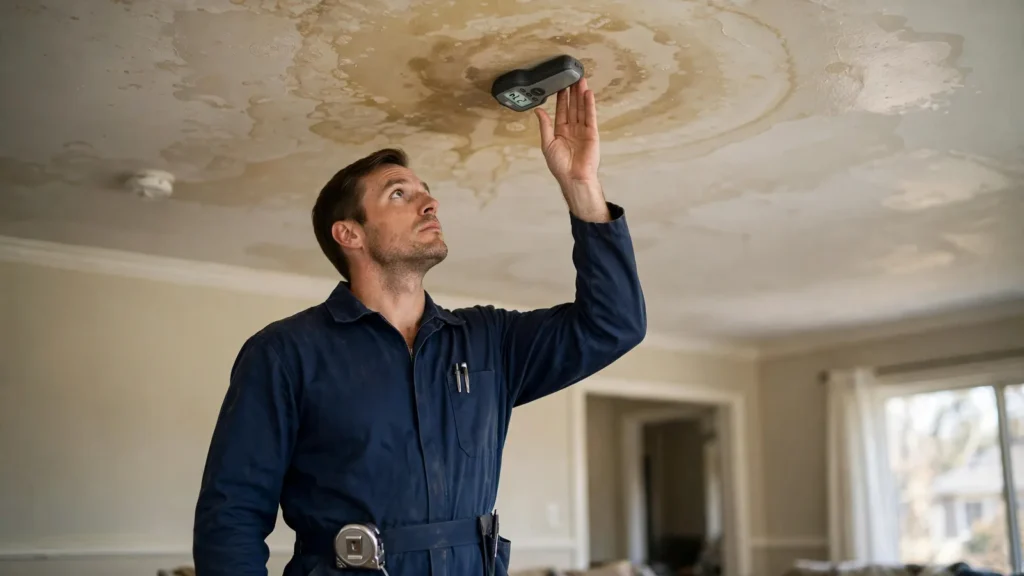
What to do when your sump pump fails
Start by deciding whether the area is safe to approach. If the basement has standing water, if water is near the electrical panel, furnace, water heater, outlets, extension cords, or appliances, stay out. Never enter a flooded basement while the power is on; electrocution is a real risk. Do not walk through water to reach a breaker or unplug equipment.
If the floor and the area around the pump are dry, you may perform a limited visual check:
- Look to see whether the sump pump is plugged in.
- Check whether the relevant breaker or GFCI outlet has tripped, but do not reset it repeatedly. A repeat trip can signal a fault that needs professional attention.
- Confirm that the float switch appears free to move and is not visibly wedged against the pit wall, piping, or debris. Do not reach into water around powered equipment.
- Look at the pit level and listen. A humming motor does not prove the pump is moving water.
- From a safe exterior location, check whether the discharge outlet appears blocked by debris, ice, or standing water. Do not dismantle the line during active flooding.
Move valuables, documents, and portable electronics to higher ground only when you can do so without entering water. Note when the issue began, whether it is raining, whether the pump is silent or running, and whether an alarm has sounded. Photos taken from a safe, dry position can help document the condition.
If the water may contain sewage, avoid all contact and keep children and pets away. Sewage-contaminated floodwater is a health hazard. A backup coming through a floor drain may be a drain or sewer problem rather than a sump-pump failure.
Need help now? Call [VERIFY BUSINESS PHONE NUMBER] or use [REQUEST SERVICE / CONTACT]. Do not delay a safety decision to troubleshoot equipment in rising water.
Need help now?
How to recognize sump pump trouble
Sump-pump problems do not all look the same. Possible warning signs include:
- Silence during rain: The pit level rises, but the pump does not start.
- Constant running: The motor continues after the water level drops or cycles with little pause.
- No visible discharge: The pump runs or hums, but water does not appear to leave through the discharge route.
- Grinding, rattling, or humming: The motor may be jammed, the impeller may be obstructed, or internal parts may be worn.
- Rising pit water: Water approaches the top of the pit faster than the pump removes it.
- Backup alarm: A high-water or backup-system alarm indicates that the primary system may not be keeping up.
- Repeated GFCI or breaker trips: The pump or circuit may have an electrical fault. Do not keep resetting it.
- Water from a floor drain: This can point to a drain or sewer backup, especially when other fixtures gurgle or drain slowly.
- Frozen or blocked discharge: The pump may operate but have nowhere to send the water.
Similar symptoms can have different causes. A silent pump might have lost power, have a stuck float, or have a failed motor. Constant running might reflect a stuck switch, a check-valve problem, a discharge issue, unusually high inflow, or a pump that is too small for the demand. An on-site inspection is the appropriate way to separate these possibilities.
Possible causes of sump pump failure
A power outage is one common reason a primary electric pump stops, particularly when heavy weather also interrupts electrical service. Even when the house still has power, a tripped GFCI outlet, tripped breaker, loose plug, damaged cord, or failed circuit can prevent operation.
Mechanical and drainage causes are also possible. A float switch can stick or fail, preventing the motor from receiving the signal to start or stop. Debris may clog the intake screen or interfere with the impeller. A failed check valve can allow discharged water to return to the pit, making the pump cycle more often. A blocked, frozen, poorly routed, or damaged discharge line can stop water from leaving the property.
Age and wear matter, but age alone does not diagnose failure. Many residential pumps are discussed in a rough seven-to-ten-year planning range, yet actual life varies with pump quality, cycle frequency, water conditions, maintenance, installation, and demand. A heavily used pump can fail earlier; a lightly used, well-installed pump may last longer.
Capacity can also be a factor. A pump that works in ordinary conditions may not keep up with unusually rapid inflow. The correct capacity depends on measured or observed inflow, vertical lift, discharge-line length and diameter, fittings, manufacturer performance data, and the property setup. Horsepower alone does not determine whether a pump is properly sized.
Finally, a home with no backup system can be unprotected when the primary pump fails or utility power goes out. A battery backup may add resilience, but it is not a substitute for correcting a blocked discharge, failed primary pump, poor installation, or unsuitable capacity.
When sump pump failure is an emergency
Request prompt emergency help when any of the following applies:
- Water is actively entering or spreading across the basement.
- The pump is dead while heavy rain continues.
- The pit level is rising toward overflow.
- Water is approaching an electrical panel, furnace, water heater, outlets, or powered equipment.
- A finished basement, essential equipment, or important belongings are taking on water.
- The water may contain sewage.
- The primary pump has failed and no working backup is available.
A noisy pump, occasional short cycling, or unusual operation during dry weather may be suitable for a scheduled visit if the pit level remains controlled and there is no immediate flooding risk. However, a constantly running pump should not be ignored. It can overheat or burn out and leave the basement unprotected when inflow increases.
Never assume a humming pump is pumping. Confirming actual discharge and safe operation may require inspection. Never enter standing water while electrical power may be present. If safety is uncertain, stay out and contact qualified help.
For broader guidance when water is already spreading, see basement flooding at /water-leak-emergency/. If water is rising through a floor drain or multiple fixtures are affected, review floor drain backing up at /emergency-drain-cleaning/.
What a plumber may do
A plumber may begin by assessing the current water level, active inflow, visible damage, and immediate electrical or contamination hazards. The inspection may include the pump, power supply, float switch, intake, impeller access, check valve, discharge piping, pit condition, and exterior discharge point. Electrical diagnosis or circuit repair may require an appropriately qualified electrician, depending on the finding and local requirements.
When conditions allow, the plumber may test whether the pump starts at the correct water level and whether it moves water at a useful rate. The discharge line may be checked for blockage, freezing, leaks, backflow, or routing problems. A worn or failed check valve may be replaced. Debris may be cleared from the pit or intake when that can be done safely and without concealing a larger problem.
If the motor, switch, housing, or internal components have failed, the appropriate approach depends on the pump design, condition, age, parts availability, and flood risk. The plumber may recommend a repair, a replacement, or additional backup protection. Recommendations should be tied to inspection findings, not to a blanket rule that every older pump must be replaced.
Repair, replacement, and backup protection compared
Repair may be appropriate when
A repair may make sense when the main problem is a replaceable float switch, check valve, obstruction, loose connection, or discharge issue and the pump itself is otherwise in serviceable condition. The decision should account for the cost of the repair, the pump’s overall condition, whether failures have repeated, and the consequences of another outage.
Replacement may be appropriate when
Replacement may be more practical when the motor has failed, the housing is damaged, the pump repeatedly cannot keep up, the unit has a history of breakdowns, or compatible repair parts are not available. Capacity should be selected from the system requirements rather than by automatically choosing the highest horsepower. Too little capacity may leave the pit overwhelmed; a poorly chosen or installed pump may cycle excessively or perform below expectations.
Backup protection may be appropriate when
A battery backup sump pump can continue moving some water when utility power fails or the primary unit stops, subject to the backup pump’s capacity and available battery charge. It can be especially valuable where the basement has a history of inflow during storms, important equipment sits below grade, or outages coincide with heavy weather. The battery, charger, alarm, piping, and pump all need periodic testing.
Backup protection does not eliminate risk. Batteries have limited runtime, pumps have rated performance limits, and discharge restrictions can affect both primary and backup units. A water alarm can provide early notice but does not remove water. In some homes, a backup may be a sensible layer of protection; in others, correcting the discharge route or replacing a failing primary pump may be the first priority.
The appropriate approach depends on inspection, observed inflow, equipment condition, discharge design, outage risk, and the value of what is at risk in the basement. The most expensive option is not automatically the right one.
Discuss the options: Call [VERIFY BUSINESS PHONE NUMBER] or use [REQUEST SERVICE / CONTACT] after the system is made safe.
Need help now?
What a typical visit may involve
A typical visit may involve the following steps, although the sequence and scope depend on site conditions:
- Review when the problem started, current rainfall, alarm activity, prior failures, and any recent work.
- Assess the basement water level and determine whether electrical or sewage hazards limit access.
- Check accessible power, GFCI protection, the plug, and the float-switch response when safe.
- Inspect the pit, intake area, check valve, discharge line, and exterior outlet.
- Test pump operation and actual water movement under controlled conditions.
- Compare pump performance with the observed inflow and discharge demands.
- Explain whether repair, replacement, discharge work, or backup protection appears appropriate.
- Test completed work and explain routine checks the homeowner can perform safely.
A visit does not guarantee that every component can be tested immediately. Active flooding, unsafe electrical conditions, inaccessible piping, frozen exterior discharge, contamination, or hidden damage may change what can be done safely at that time.
How to reduce the risk of future basement flooding
Test the pump before the local rainy season and periodically thereafter. When the pit is accessible, the area is dry, and the manufacturer’s instructions allow it, slowly pour clean water into the pit until the float rises. The pump should start, lower the water level, and stop. Watch for actual discharge rather than relying on motor sound. Stop the test and request service if the pump hums, fails to start, runs without lowering the water, leaks, trips power, or makes unusual noises.
Keep the pit free of loose debris that could interfere with the float or intake. The pit should have a secure, suitable cover where applicable, while allowing required components to operate. Check the exterior discharge outlet for obvious blockage and make sure water is not simply returning toward the foundation. Any discharge arrangement must comply with applicable local requirements; do not redirect water onto neighboring property or into an unapproved connection.
Consider a battery backup pump and a high-water alarm when an outage or primary-pump failure would create serious consequences. Test the backup according to the manufacturer’s instructions and replace batteries based on condition and manufacturer guidance. An alarm should be audible where occupants will notice it; connected alerts may add convenience but should not be the only warning method.
Know which breaker serves the pump, but do not enter water to reach it. Keep stored items on shelves rather than directly on the basement floor. Pay attention to changes in cycle frequency, sound, and discharge. Schedule inspection when a pump begins running constantly, cycling differently, or struggling to keep up instead of waiting for the next storm.
Philadelphia rowhomes often include below-grade basements and tight utility areas. Older homes may have aging pumps, limited pit access, or finished basement space with significant contents at risk. Heavy rain can expose weaknesses in a system that appears adequate during dry weather. These are planning considerations, not a diagnosis of any particular home.
Why prompt attention matters
A failed sump pump can allow water to spread from the pit into flooring, wall assemblies, stored belongings, and finished living space. Water can also reach a furnace, water heater, outlets, or an electrical panel, turning a property-damage problem into a serious safety hazard. Prolonged dampness can create moisture and indoor-environment concerns, although a plumber should not diagnose mold from a description alone.
A pump that runs constantly can wear out at the moment it is needed most. A pump that hums without discharging may provide false reassurance while the pit continues to fill. A partially blocked discharge can worsen when rainfall increases or temperatures fall. Prompt inspection can identify whether the immediate need is a simple correction, a component repair, a replacement, or a broader drainage issue.
For active basement flooding, visit /water-leak-emergency/ and follow the electrical-safety guidance. If sewage or a floor-drain backup is involved, stop water use in the building and treat the condition as a drain emergency (see /emergency-drain-cleaning/).
Before the plumber arrives
- Stay out of standing water and keep children and pets away.
- Check power or the float only when the entire approach is dry and safe.
- Move portable valuables to higher ground without crossing flooded areas.
- Note when the problem began, recent rainfall, alarm activity, and whether the pump is silent, humming, or running constantly.
- Photograph the pit and visible water from a safe location.
- Identify the pump breaker and exterior discharge location, but do not enter water or dismantle piping.
- Stop using plumbing fixtures if water is backing up through a floor drain or sewage may be present.
- Clear a dry access path for the technician when possible.
DIY limits: what is safe and what needs a professional
Safe homeowner steps are limited to observation and simple checks in dry conditions. You may confirm that the plug is seated, look at the breaker or GFCI, observe whether the float is obstructed, check the exterior discharge outlet from a safe location, and perform a clean-water test when the manufacturer permits it.
Stop and request professional help when the pump repeatedly trips power, the motor hums without moving water, the pit is near overflow, the system runs constantly, the discharge is blocked or frozen, the unit needs replacement, or a backup system needs to be installed. Electrical repairs, work in standing water, and contact with sewage-contaminated water are not homeowner troubleshooting tasks.
- Never enter a flooded basement while the power is on.
- Never assume a humming pump is actually pumping.
- Never ignore a constantly running pump; it can burn out and leave the basement unprotected.
- Avoid all contact with sewage-contaminated floodwater.
What affects sump pump repair or replacement cost?
Actual pricing depends on the property, equipment, access, timing, and the business’s pricing. Factors may include:
- Whether the problem needs adjustment, component repair, or full pump replacement
- Pump type, capacity, materials, and manufacturer requirements
- Addition of a battery backup, charger, battery, alarm, or secondary discharge arrangement
- Check-valve replacement or discharge-line clearing, rerouting, insulation, or repair
- Pit size, cover, debris, and physical accessibility
- Tight basement stairs, finished surfaces, or equipment that limits safe access
- Electrical findings that require a separately qualified professional
- Emergency or after-hours scheduling
- Floodwater, contamination, and cleanup conditions outside the plumbing repair scope
No price should be published on this page unless the business confirms what it includes, which conditions change it, and whether emergency or diagnostic charges apply.
Frequently asked questions
Why isn’t my sump pump turning on?
Possible causes include a power outage, unplugged cord, tripped breaker or GFCI, stuck or failed float switch, obstructed intake, failed motor, or wiring problem. Check only from a dry, safe area. If water is rising or power trips again, stop troubleshooting and request service.
What should I do if my basement is flooding?
Stay out if standing water may be energized. Do not walk through water to reach a breaker or the pump. Keep people and pets away, move belongings only from dry areas, and call for help. Avoid contact if sewage may be present.
Why does my sump pump run constantly?
The float may be stuck, the check valve may be failing, the discharge may be blocked, water may be returning to the pit, inflow may be unusually high, or the pump may be undersized. Constant running can overheat the motor, so it deserves prompt inspection.
How do I test my sump pump?
When the area is dry and the manufacturer permits it, slowly pour clean water into the pit until the float rises. The pump should start, lower the water, discharge it, and stop. Do not perform the test around standing water or exposed electrical hazards.
Do I need a battery backup sump pump?
A backup may be worthwhile when power outages, primary-pump failure, high storm inflow, or valuable basement contents create significant risk. Its usefulness depends on capacity, battery condition, expected runtime, maintenance, and whether the discharge route remains available.
When is sump pump failure an emergency?
It is an emergency when the basement is actively flooding, the pit is close to overflowing, the pump is dead during heavy rain, water approaches electrical or heating equipment, or sewage may be present. A noisy pump in dry weather may be scheduled if the water level remains controlled.
Should I repair or replace my sump pump?
A repair may suit a serviceable pump with a correctable switch, check-valve, or obstruction problem. Replacement may be more practical when the motor or housing has failed, breakdowns repeat, capacity is inadequate, or repair value is poor. Inspection should drive the decision.
How long do sump pumps last?
Many residential pumps are planned around a rough seven-to-ten-year range, but actual service life varies widely with use, installation, water conditions, maintenance, and product quality. Performance and condition matter more than age alone.
What size sump pump do I need?
Sizing should account for actual inflow, vertical lift, discharge-pipe length and diameter, fittings, and the manufacturer’s performance curve. Horsepower alone is not enough. A plumber may measure or estimate the system demand and explain the selection.
How much does sump pump replacement cost?
Cost depends on pump type and capacity, pit access, check-valve and discharge work, backup additions, electrical requirements, and service timing. A site-specific estimate is more reliable than a generic price that omits important conditions.
Request sump pump service
If the pump has stopped, the pit is rising, or the basement is taking on water, prioritize safety and request professional help. Do not enter water around energized equipment or attempt repairs in a flooded area.
- Call: [VERIFY BUSINESS PHONE NUMBER]
- Request service: [REQUEST SERVICE / CONTACT]
Need help now?
Related services
Water Leak Emergency
Ceiling, wall, fixture and supply-line leaks.
Emergency Drain Cleaning
Severe clogs and main-line warning signs.