Home › Northwest Philadelphia
Emergency Plumber in Northwest Philadelphia
Plumbing help for Chestnut Hill, Mt. Airy, Manayunk, Roxborough, East Falls, Germantown, and Wissahickon (ZIPs 19118, 19119, 19127, 19128, 19129, 19144).
[VERIFY COVERAGE: confirm each ZIP with the service partner and USPS before publishing.]
A burst pipe in a Chestnut Hill stone house, sewage backing up in a Manayunk rowhome during a storm, or no hot water in a Germantown twin: tell us what is happening and where, take safe first steps, and get routed to the right plumbing help.
Is this a plumbing emergency?
Answer these two lists honestly before you call. Triage sorts urgency; it does not diagnose your pipes from a web page.
Act now
- Water is spreading through a ceiling, wall, or floor
- Sewage is coming up through a toilet, tub, shower, or floor drain
- You have no water, or a pipe may have burst after a freeze
- Water is near outlets, the panel, or appliances: move away and do not touch wet equipment
- You smell gas: leave the area and call emergency services
Can usually wait for a scheduled visit
- One slow drain or a dripping faucet
- A toilet that runs between flushes but flushes normally
- A water heater making noise without leaking
- Lukewarm water that still runs through the taps
Between the two lists? Describe the symptoms when you request help. Homes near the Schuylkill should also watch basements after heavy rain. In rowhomes and twins, tell neighbors below or beside you if water may be traveling. Not sure? See what counts as a plumbing emergency.
Water moving where it should not be?
Say what is happening and where in Northwest Philadelphia. Triage routes it to emergency, same-day, or routine help.
Why request help this way
Describe it once
Your ZIP, the property type, and the symptoms are enough to route the request. No repeating the story to three different people.
Triage before dispatch
Emergency, same-day, or routine: the response level matches what you describe, not a guess made over the phone.
Coverage checked by ZIP
Your ZIP is confirmed with the responding partner before anything is promised. [VERIFY COVERAGE]
Explained before it starts
The plumber inspects, states the finding and the cost, and work begins only after you approve it.
Northwest Philadelphia, by the numbers
200 ft
Bedrock rise from Main Street Manayunk to the upper streets
16.5 ft
Schuylkill River crest at Manayunk during Hurricane Ida, September 2021
6 to 7 ft
Average depth of home sewer laterals below the sidewalk (PWD design data)
4 million
Gallons held by PWD’s Venice Island underground basin that captures Manayunk storm flows
Plumbing problems that show up in Northwest Philadelphia
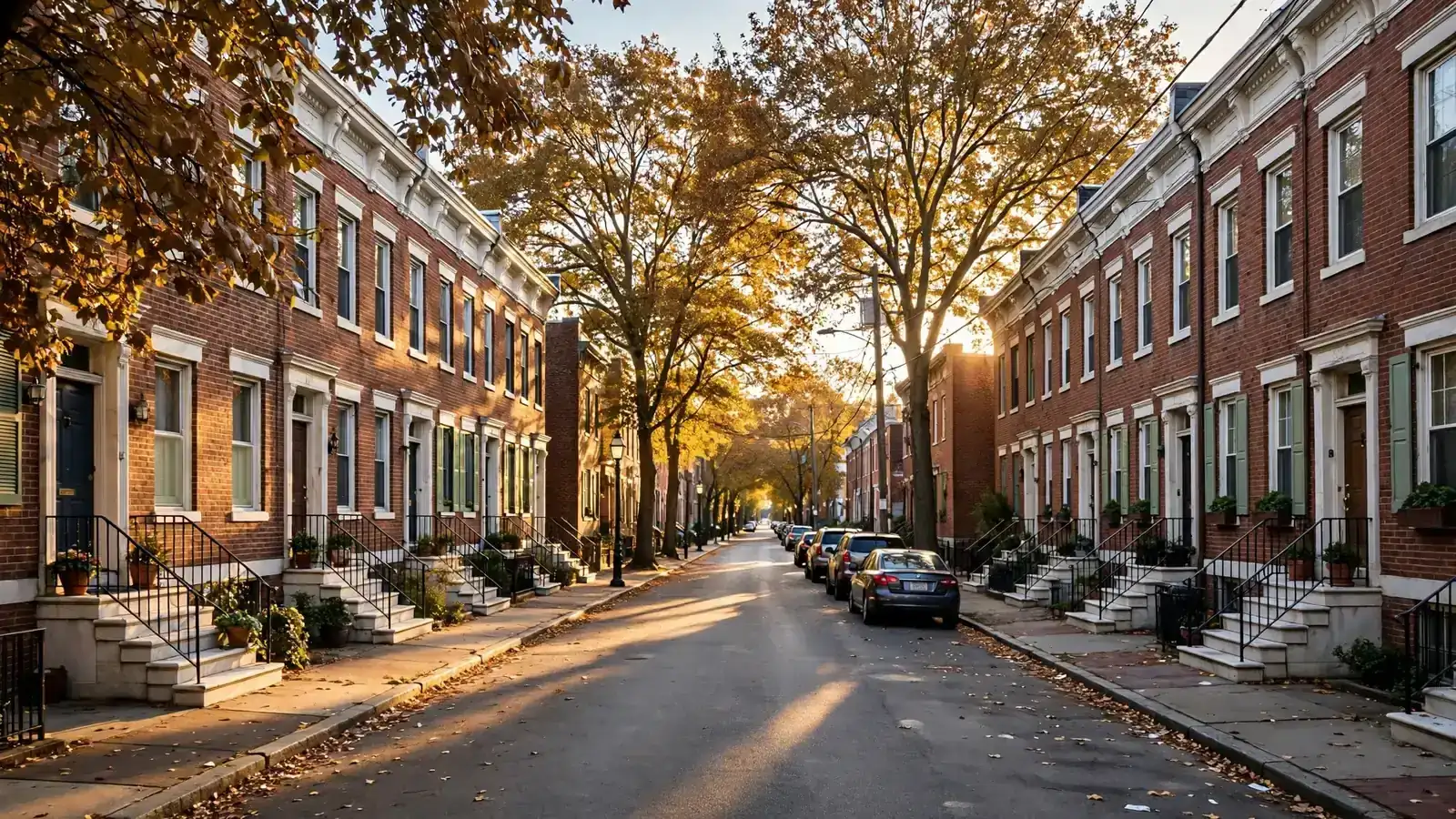
Northwest Philadelphia is not one housing type. Stone Victorians on the Hill, mill-era rowhomes on Manayunk’s slopes, and twins and rowhomes in Germantown and East Falls each push plumbing toward different failures. Match what you see to the pattern below.
Chestnut Hill and Mt. Airy (19118, 19119): old stone, old pipes
Much of the housing here dates from the 1700s through the early 1900s: Wissahickon schist walls, slate roofs, and laterals of vitrified clay and cast iron running 6 to 7 feet below the sidewalk. Mature street trees send roots into those laterals once age or settlement cracks them. This is the city’s highest ground, so the pattern is overland runoff and tired lines, not river water.
Manayunk and Roxborough (19127, 19128): steep grades, storm water
Upper streets climb about 200 feet of bedrock above Main Street, so laterals run downhill from rowhomes built against rocky ledges, and heavy storms can surcharge the combined sewers. PWD built its 4 million gallon underground basin at Venice Island for exactly this drainage area. During Ida the Schuylkill crested at 16.5 feet and Main Street basements took three feet of water. Narrow hillside streets and stair-only front access make exterior work slower here.
Germantown and East Falls (19144, 19129): backups and old heating
The city’s emergency office lists Germantown among the areas hit hardest by basement backups when combined sewers are overwhelmed, and East Falls among those hit hardest by riverine flooding. Expect oil or gas boilers feeding hot water radiators, stone foundations, and partial basements without sumps. Home values run well below the Hill here, so weigh repair quotes with a budget in mind.
Who pays for the line to the street?
In Philadelphia the homeowner is typically responsible for the water and sewer lines from the home to the main, so an aging clay lateral is the owner’s bill. The Water and Sewer Line Protection Program, run with American Water Resources and the Philadelphia Energy Authority, covers line leaks, breaks, clogs, and blockages from the home to the main, with plans that started at $3.99 a month for water lines and $6.99 for sewer lines. Worth knowing while the lateral still works.
Coverage: ZIP codes and neighborhoods
[VERIFY COVERAGE] We plan to serve these Northwest Philadelphia ZIP codes. Confirm your ZIP when you request help: coverage is verified with the responding partner before dispatch.
19118, Chestnut Hill
19119, Mt. Airy
19127, Manayunk
19128, Roxborough (includes Wissahickon)
19129, East Falls (includes Wissahickon)
19144, Germantown
Blocks near the Schuylkill in Manayunk and East Falls, and low-lying blocks in Germantown, can flood or back up during extreme rain. Mention it when you describe the problem so triage accounts for it.
Emergency plumbing services for Northwest Philadelphia
Pick the problem that matches what you see. Each page covers safe first steps, warning signs, and what a plumber may do.
Burst Pipe Repair
A burst supply line or radiator leak gets triaged fast, with safe first steps for shutting water down.
Frozen Pipe Repair
No water after a cold night, or a pipe that froze and split: what to do before it thaws.
Basement and Sewer Backup
Sewage or stormwater coming up through drains, toilets, or floor drains.
Water Leak Emergency
Ceiling, wall, and fixture leaks, including water traveling between rowhome units.
Emergency Toilet Repair
Overflowing toilets and repeat backups, including basement toilets tied to the main line.
No Hot Water Emergency
Water heater failures and boiler-fed hot water problems in radiator-heated homes.
Sump Pump Emergency
Pumps that cannot keep up during long rain, or that quit when you need them most.
Emergency Drain Cleaning
Severe clogs, multiple slow drains, and the warning signs of a main-line blockage.
Not sure which service matches?
Describe the symptoms in plain language. Triage matches the problem to the right help, and you do not need the technical name.
How requesting help works
1
Describe the problem
Your ZIP or neighborhood, the property type (stone Victorian, hillside rowhome, twin, apartment), the room or fixture, the symptoms, and whether water is actively moving.
2
We triage the request
Emergency, same-day, or routine. Triage sets the response level; it is not a remote diagnosis.
3
Coverage is confirmed
The responding partner and your ZIP are verified before anything is promised. [VERIFY COVERAGE]
4
A plumber inspects and explains
You hear the finding, the scope, and the cost before any work is approved.
How this site works
- This site connects you with a local Philadelphia plumber. It runs on a lead-generation, pay-per-call model under rank-and-rent.
- No license numbers, reviews, ratings, technicians, or response times are invented here. Anything unverified stays marked [VERIFY].
- [VERIFY BUSINESS PHONE NUMBER]: the real, working number goes here before this page can publish.
- Hours, pricing, and availability are confirmed on the call. Nothing on this page promises them in advance.
Request help now
Prefer to type it out? Send the details below: your ZIP, the property type, and what is happening. The same triage applies.
Prefer to talk? Call [VERIFY BUSINESS PHONE NUMBER].
Renting in Northwest Philadelphia?
If you rent, plumbing repairs are usually your landlord’s or property manager’s job to arrange, so contact them first and find out who can reach the main water shutoff. If water is spreading and no one responds, call [VERIFY BUSINESS PHONE NUMBER], take photos of the damage, and keep a record of every attempt to reach the landlord.
Northwest Philadelphia plumbing FAQs
A pipe burst after a freeze. I have an oil heat system that feeds radiators throughout the house. Should I turn off the oil boiler until morning?
Shut the water off first, since that stops the damage. If the system lost water, switching the boiler off keeps it from firing dry, then request help. Do not drain the radiators yourself unless a professional tells you to.
What happens when a radiator bursts because the pipes froze? Tiny holes started forming, one after another, along a single vertical tube.
Freezing water expands and splits the metal, and pinholes often open in a row along the weakest tube. A plumber checks whether that radiator can be isolated and whether the rest of the loop survived. In the radiator-heated homes common across Germantown and Mt. Airy, the full loop needs checking before the heat goes back on.
We bought a 1928 house and found tree roots blocking up to 75% of the sewer line. One company quoted $7-8k for pipe bursting, and another suggested cutting the roots and lining the pipe. Which is right?
Both are legitimate repairs, and the right one depends on the pipe’s condition, depth, and access. Bursting replaces the line while lining preserves it after the roots are cut out. Get a camera inspection and written quotes for both options before you decide.
I got quotes between $3k and $10k for tree root damage on a deep sewer line. Should I fix the existing pipe or cut a new trench with easy access to the mains?
Depth drives the price because excavation is the expensive part, so access is the real question. When the old pipe’s route is sound, repairing in place usually costs less than a new trench. In Philadelphia you own the lateral from your home to the main, so confirm where that responsibility ends before anyone digs.
We have a toilet in the basement. When we do laundry, shower, or use the upstairs toilets, drainage comes up and overflows the basement toilet. What should we do?
That pattern points to a main line blockage: wastewater has nowhere to go except the lowest fixture. Stop using water in the house and request help, since more flushing makes it worse. Skip chemical drain cleaners for a suspected main line clog.
The toilet keeps backing up and overflowing. When I plunge it, water comes up in the bathtub, and all the drains run slowly.
Water moving between fixtures means the blockage sits past the branch lines, in the main drain or the lateral. Stop running water and request help; this is past what a plunger can fix. Keep people and pets away from any water that came up through a drain.
Why does my basement flood during long rains? The sump pump ran for 30 hours straight, which is longer than usual.
A pump that never stops is either overwhelmed by inflow or starting to fail: check the power, the float switch, and that the discharge line is clear and sends water away from the house. When the pump checks out and water still comes in, inflow exceeds capacity and the setup needs an upgrade or a backup pump. Long-rain flooding matches the pattern Philadelphia’s emergency office warns about for river-adjacent and low-lying blocks.
A friend in a Philadelphia row home has a flooded basement. How should he handle the mold and mildew risk?
Stop the water source first, then dry the basement fast: pump or wet-vac standing water, ventilate, and pull out soaked porous materials like carpet and cardboard. Watch walls and stored items over the next few days, and remove anything that stays damp. A plumber fixes the entry point so the next storm does not repeat it.
What are the main causes of low water pressure, and is there a way to improve it?
In older homes the usual causes are mineral buildup and corrosion inside aging supply lines, a failing pressure regulator, or a valve that is only partly open. A plumber measures pressure at several points to find whether the restriction is inside the home or on the supply side. Repiping is the last resort, not the first guess.
Water is slowly seeping from the bottom of our water heater and it looks rusty. Is the unit done for?
Rust-colored seepage from the tank bottom usually means the tank itself is failing, and tanks cannot be repaired. Shut off the water and the power or gas to the unit, contain the leak, and plan for a replacement. Have a plumber confirm the source on inspection before you buy anything.
Plumbing emergency in Northwest Philadelphia?
Tell us what is happening, where it is happening, and whether water is moving. Safe first steps now, the right help next.